
When your dog suddenly holds up a back leg, finding TPLO surgery in San Diego starts to feel urgent within minutes. At PetSurg & ER4Pets, Dr. Diana Jones is the board-certified surgeon who performs these knee repairs. We're the only ACVS board-certified surgical facility along the I-15 corridor in San Diego County. We care for pets from across San Diego and Orange Counties, including families in Poway and Escondido. Our mission guides every case: "In caring for your pet, our goal is your peace of mind." For an owner watching a dog hop on three legs, peace of mind begins with knowing who will perform the surgery and what that person has trained to do.
TPLO Surgery San Diego
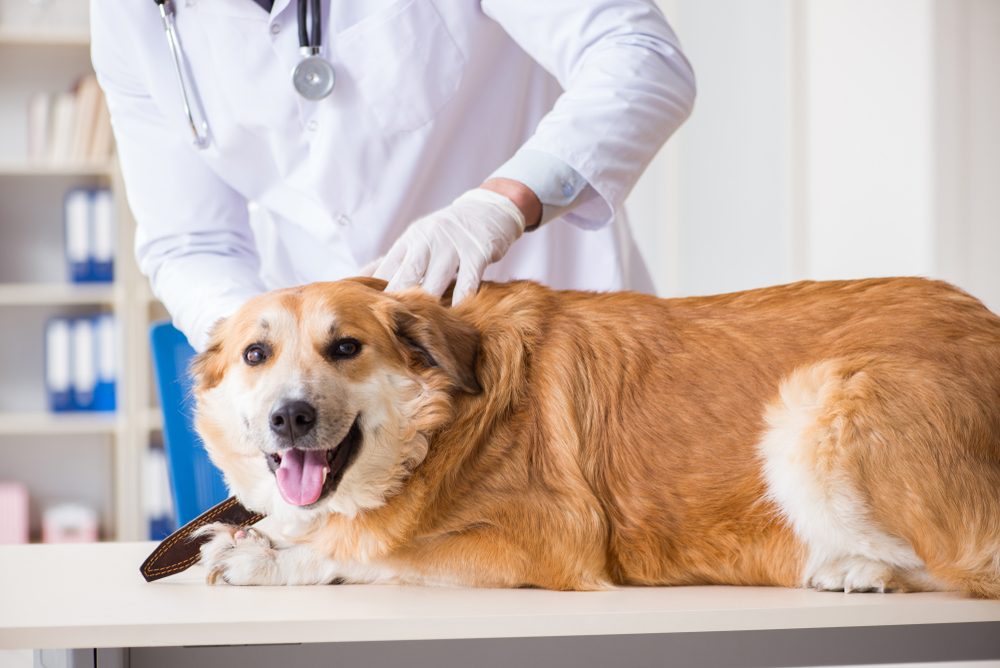
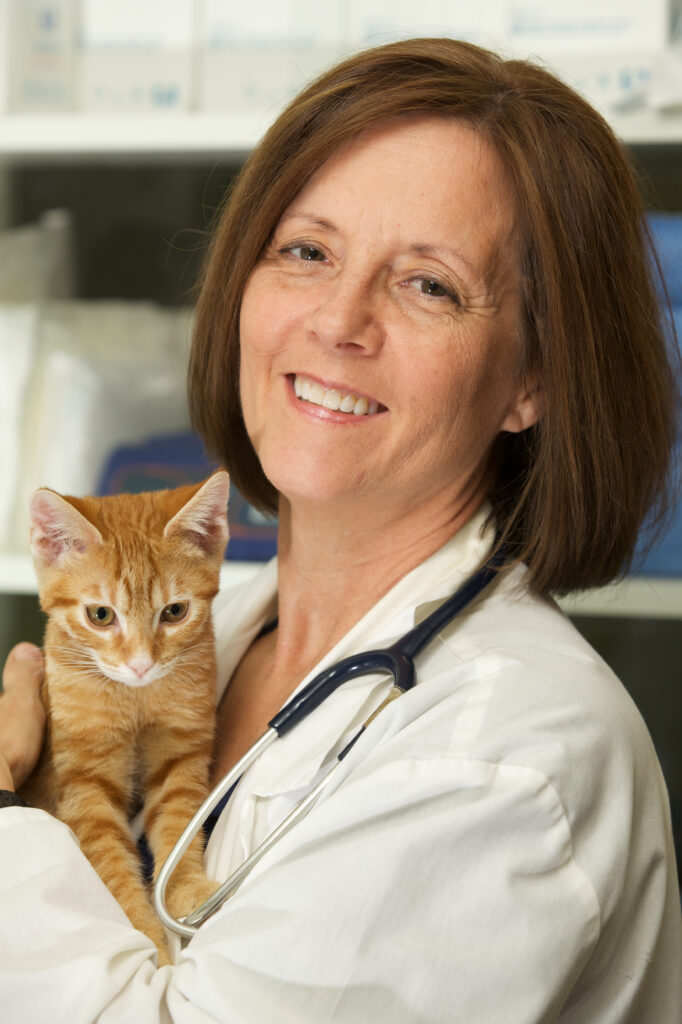
Meet the Doctor
Dr. Diana Jones spends her days repairing torn knee ligaments, broken bones, and other injuries that keep pets from moving freely. She opened PetSurg & ER4Pets in 2010 so local families could reach board-certified surgical care at an independently owned hospital. Her training began with a DVM from the University of Georgia in 1986. She then finished a three-year surgical residency at the University of Saskatchewan, earning a Master's degree and the Outstanding Resident Award. Her published arthroscopy research there showed that joint lining can heal. She taught as an Assistant Professor and served as Chief of Service at Mississippi State University between 1991 and 1995. In 1994 she earned ACVS board certification, which requires an internship, a three-year residency, published research, and a demanding exam. She added a Master's in Education from San Diego State University in 1997, and she brings that teaching background to every conversation about your pet's surgery. Owners looking for a TPLO surgeon in San Diego get a doctor who has studied joints at the research level. Today she holds the Top Rated Veterinarian in San Diego, CA designation, and she remains the veterinary orthopedic surgeon behind every TPLO case we perform.
Options: Surgical Approaches for Canine Cruciate Ligament Repair
TPLO Surgery (Tibial Plateau Leveling Osteotomy)
TPLO is the canine knee surgery Dr. Jones performs here for dogs with CCL rupture. It changes the knee’s geometry so the joint holds steady on its own.
Leveling the top of the shinbone removes the forward sliding force that the torn ligament used to resist. Once that force is gone, the knee stops slipping each time your dog takes a step. The bone itself carries the load.
Among the options in orthopedic surgery for dogs, TPLO suits these patients well:
- Medium, large, and giant breeds
- Working and sport dogs that need durable knees
- Young dogs with many active years ahead
Opposing Perspectives
A 2022 systematic review in Frontiers in Veterinary Science, pooling published studies of dogs, found that the overall complication rate for TPLO was 20.4 %.
The size of the operation counts against it too. Cutting and repositioning bone makes TPLO a bigger surgery than a suture repair, and recovery takes longer. The upfront cost runs higher as well.
For a small dog with a quiet routine, those trade-offs can tip the decision toward a lighter repair.
Durability is the strongest case for TPLO. Larger dogs that need to stay active and comfortable for years are the patients who gain the most from it.
Extracapsular (Lateral Suture) Repair
Extracapsular repair, also called lateral suture repair, tackles the same torn ligament through a different method. A surgeon anchors a strong synthetic strand along the outside of the knee to stand in for the CCL.
Over the following months, scar tissue builds around the joint. That tissue gradually takes over the job of holding the knee steady as the suture loosens and wears out. The technique involves no bone cut and no plate.
These features make it a reasonable choice for small breeds and for dogs with low activity levels, where the knee faces lighter daily loads.
Opposing Perspectives
A simpler surgery and a lower upfront cost give extracapsular repair its place. Those two points carry the most weight for small dogs with light daily activity.
Its weak point shows up in heavier or more active dogs. Each stride sends force through the knee, and over time that force can fatigue the suture until it fails.
A steep shinbone slope can expose the same weakness in a small dog.
Researchers compared 61 small dogs with steep tibial plateau angles and found knees repaired with a lateral suture more often had palpable stifle pain at long-term follow-up than knees treated with TPLO.
Is your dog experiencing knee problems or limping?
Is tplo surgery right for you and your dog?
Maybe your dog yelped after chasing a ball, or maybe the limp crept in over a few weeks. Either pattern can point to a torn cruciate ligament.
The TPLO procedure for dogs works well for many knees, but it fits some patients better than others.
Your dog’s size and health both matter, and so does how long the limp has lasted.
Speak to a Professional!
Who is a candidate for TPLO surgery?
Your dog is a likely candidate if an exam or X-rays show a partial or complete canine cruciate ligament rupture. We most often recommend this surgery for medium, large, and giant breeds, since their weight puts heavy shear force on the knee. If you own a small dog, cruciate ligament repair is still an option, though we may weigh a different technique for a lighter knee. Some health problems come first. A dog with an active infection, uncontrolled metabolic disease, or a serious illness elsewhere in the body needs that issue stabilized before anesthesia. We treat dogs and cats, so a limping cat deserves an exam too, even though TPLO is mainly a canine operation.
What does the TPLO surgery process involve?
During a tibial plateau leveling osteotomy, Dr. Jones changes the slope at the top of the shinbone so the knee stays steady after a cranial cruciate ligament (CCL) tear. She makes a curved cut near the top of the bone, rotates that sloped surface until it sits level, and secures it with a bone plate and screws. Before surgery, we run same-day bloodwork and in-house X-rays, and we add ultrasound when your dog's history calls for a closer look. Dr. Jones walks you through those images and the plan before you sign anything. Our trained team keeps your dog monitored under anesthesia for the whole operation.
Where does TPLO surgery fit into your dog's treatment plan?
Every step happens at PetSurg & ER4Pets, 12335 World Trade Drive, San Diego, CA 92128. You can call us directly at 858.676.1600, and you don't need a referral from another practice to book an evaluation. Your dog won't get moved to a second hospital partway through care. After surgery, your dog recovers here under our 24/7 onsite veterinarian, including nights, weekends, and holidays. Recheck X-rays happen in the same building, so the surgeon who placed the plate is the one reading the healing bone. That single address also cuts down on car rides for a dog who shouldn't be hopping in and out of vehicles.
When is the right time to consider TPLO surgery?
Consider surgery as soon as an exam confirms a knee tear. A dog with a sudden, complete rupture often refuses to touch the foot to the ground and needs an exam within days. A partial tear can look milder because your dog keeps walking with only a slight hitch. Those remaining ligament fibers tend to keep failing until the tear becomes complete. A torn ligament can't heal on its own. Waiting only delays the fix. As for TPLO recovery, your dog will likely start placing weight on the leg within the first few weeks. Full dog surgery recovery time runs several months, depending on size, age, and how closely you limit activity at home.
Why TPLO surgery over the alternatives?
For medium and large dogs, TPLO usually gives the knee a more stable long-term result than extracapsular repair. Extracapsular repair still wins on simplicity, which matters most for small dogs with quiet routines. TPLO asks more of you in return, both at home during recovery and on the first bill. Conservative management, meaning rest and pain medication alone, leaves the knee unstable. Our exam looks at your dog’s weight, age, and knee angle before we recommend either repair. Owners weighing dog ACL surgery in San Diego can look at direct trial data. In a randomized trial following 80 patients with cranial cruciate ligament disease for one year, dogs that underwent TPLO had better outcomes than those given lateral fabellar suture stabilization, based on gait analysis and owner satisfaction.
Untreated CCL Tears Lead to Permanent Joint Damage in Dogs
An untreated CCL tear keeps damaging the first knee and puts the second one at risk. Your dog shifts weight onto the healthy leg to spare the injured one, and that extra load strains the second ligament. In a PLoS ONE study of dogs with a non-contact tear in one knee, 54% developed subsequent contralateral rupture within the study period. A second tear means a second operation, a second stretch of restricted activity, and a second bill. It also means another round of anesthesia for a dog who may be older by then. Pain on both sides can leave a large dog struggling to stand up at all. If the other leg gives out at night, you may end up searching for an emergency vet in San Diego with two knees to fix.
Alternative Treatments: What happens if you do nothing?
Financial Implications of More Invasive Solutions
Putting off repair of a torn ligament tends to make the final bill larger. Questions about TPLO surgery cost are fair to raise at your first exam. The meniscus, the cartilage cushion inside the knee, absorbs more grinding every week the joint stays loose.
Delay can add charges such as:
- Surgery to treat a torn meniscus
- Extra weeks of pain medication
- More recheck visits and X-rays
- A longer stretch of restricted activity at home
Our surgical fees run well below what most San Diego specialty hospitals charge. That gap shrinks fast once a meniscal tear adds a second procedure to the plan.
Supporting Citation/Source
Cruciate tears cost U.S. dog owners heavily even before complications enter the picture.
In a Journal of the American Veterinary Medical Association study, researchers who surveyed veterinary surgeons and practitioners estimated that owners spent $1.32 billion for the treatment of cruciate ligament rupture in U.S. dogs during 2003.
That estimate covers a single year of spending nationwide.
We give you an estimate before surgery so you can plan for it. Each later complication, such as a meniscal procedure, adds line items to that plan.
Health Implications of More Invasive Solutions
A loose knee wears down its own cartilage with every step. The smooth lining on the bone ends roughens, and inflammation sets off osteoarthritis.
Surgery can work around a torn ligament, yet the arthritis that follows does not reverse. Muscle in the injured leg starts shrinking within days as your dog keeps weight off it. Weak muscle then gives the joint even less support.
We manage arthritis as a chronic condition. If your dog needs pet surgery in San Diego for a torn ligament, an early repair gives the cartilage less time to wear. Long-term arthritis care can mean medication and monitoring for the rest of your dog's life.
Supporting Citation/Source
Recent veterinary literature, summarized in a concise review on canine cruciate disease, links ligament failure to joint instability, cartilage breakdown, meniscal injury, and the eventual progression to osteoarthritis if untreated.
The review lists those changes in order. Instability comes first, and arthritis comes last.
A cruciate limp can ease after a few days of rest, while the knee stays just as loose. Rest quiets the soreness without steadying the joint.
Surgery removes the looseness that drives the damage, though cartilage already lost does not grow back.
Safety Implications of More Invasive Solutions
Surgical risk climbs the longer an unstable knee goes untreated. A dog who comes in months after the injury brings a harder case to the operating table.
Chronic tears often come with extra bone growth and thickened tissue around the joint. Each of those adds time to the operation and to your dog's stretch under anesthesia. Thickened tissue also makes the joint harder for the surgeon to see and reach.
Our intensive and critical care team watches patients who need close monitoring after surgery. Extra hours under anesthesia still carry more risk than a shorter repair.
Supporting Citation/Source
Poor health raises anesthesia risk, and a long wait gives an older dog's health time to slip.
Veterinarians grade that health on the ASA physical status scale before anesthesia. A dog graded III or above has disease that affects the whole body.
Dogs graded ASA III or higher had 4.73 times the risk of death linked to anesthesia compared with healthier dogs, according to a systematic review in Frontiers in Veterinary Science.
We set your dog's grade at the pre-surgical exam, and it can rise between a first visit and a delayed surgery date.
FAQs
What happens during your dog's hospital stay after TPLO surgery?
Your dog rests in a private room during 24-hour hospitalization. Our team checks on your dog throughout the day and night.
Each dog gets individual walks and has no contact with other pets, which keeps a fresh incision away from rough play and germs. Pain management starts during surgery and continues through the hospital stay. Dogs who just had a bone cut need quiet time.
Before you head home, we go over activity limits, medications, and the warning signs to watch for at the incision. Plan on a quiet room at home with good footing for the weeks of rest ahead.
Is TPLO surgery an option for cats or small dogs?
TPLO is built for the forces inside a dog's knee, so we use it most often in medium, large, and giant breeds.
Small dogs aren't automatically ruled out. Knee shape matters along with size, and steep tibial angles can change the picture for a little dog. Dr. Jones examines your pet and reviews the X-rays with you to settle the question.
A cat or very small dog with a painful hip may be a candidate for FHO surgery in San Diego. We perform that procedure, which removes the damaged ball of the hip so a false joint can form and ease the pain.
Can a dog walk after a CCL tear without surgery?
Yes, a dog can often keep walking after a tear, especially a partial one. A limp that lingers still deserves an exam with X-rays.
A dog limping on a back leg after a canine cruciate ligament rupture usually toe-touches or shifts weight forward when standing. You might notice your dog sitting with that leg kicked out to the side. Some dogs also struggle to rise after a nap.
Larger dogs seldom regain full use of the leg through rest alone. The limp tends to return or worsen as the months go by.
Some dogs look sound for a week, then limp again after a hard run at the park.
Will your regular veterinarian receive your dog's surgical records?
Yes. We send your dog's surgical records to your primary care veterinarian without waiting for anyone to ask.
That way your regular veterinarian sees what we found and what we did, and you don't have to carry paperwork between offices. We also coordinate directly with referring practices before surgery when a family veterinarian sends your dog our way.
Give us your family veterinarian's name when you check in, and the records go there after each visit with us.
We stay available if questions come up about the repair later on. Your longtime veterinarian can keep handling checkups and long-term joint care after the knee heals.
What other orthopedic surgeries are available at PetSurg & ER4Pets?
We perform several orthopedic surgeries for dogs and cats besides knee stabilization. Each one targets a different joint or bone problem:
- fracture repair for broken bones after falls or car accidents
- Femoral head ostectomy (FHO surgery) for painful hip joints
- Patellar luxation repair for kneecaps that slip out of place
- Limb amputation when a leg can't be saved
We handle both scheduled cases and emergency surgery, so a dog who breaks a leg on a weekend doesn't wait for a weekday referral. Patients arriving through a planned referral and patients rushed in after an injury see the same surgical team.
